Scientifically developed AI for monitoring industrial systems.
Reducing downtime in 3 phases
100,000+ signals. 10 years of research. 1 AI system for your entire production – on-premises, no cloud, for 1 or 1000 machines.
Leading partners from industry and research




Ready for industry: Kauzen.Diagnose.
The AI module for visual fault diagnosis in complex machine environments.
Fewer failures, shorter downtimes, more safety – with a system that truly understands your machine structure.
Instant diagnosis
The moment a fault occurs: location and cause at a glance – repair with a target, not guesses.
Deep machine integration
Monitors hierarchical signal structures in real time
Self-learning
Continuously adapts to new production contexts
Machine insights
Never-before-seen insights from your machines – usable in other processes across your plant.
- The smartest on-premises AI on the market
- Full service when IT infrastructure is missing
- Local networks + no cloud lock-in, high data sovereignty
- Modular system *1 or 1000 machines
- Ideal for OPC UA, but open to other interfaces
Implementation
3 Phases to Implementation
Only 3 days on site in 1–3 weeks – 100% on-premises, with zero downtime.
From the first analysis to active monitoring – three consecutive phases
Initial analysis
< 1 month*Using the Digital Twin Creator, the existing production bus is analyzed automatically and a digital twin of the plant is created. On this basis, compatibility with the Kauzen system is checked and any required adjustments are identified.
Departments involved: IT, production, maintenanceInstallation
< 1 week*The Kauzen system is deployed on the plant infrastructure – via installation of suitable hardware on site or as a rollout within your company's own cloud – then connected to the production plant and configured for operation.
Departments involved: IT, productionReal-time monitoring
< 1 day*The system is ready and live operation begins: the current data of the plant is automatically read, processed and analyzed – anomalies and relevant plant states are made continuously visible.
Departments involved: production, maintenanceOPC UA – 1-day interface connection
Digital twin
On site: environment exploration & twin generation
Configuration
Remote: software & NN architecture design – only if customization is needed, otherwise straight to installation
Installation
On site: setup & OPC UA connection
Autonomous training
Automatic training of the neural networks – under optimal conditions
Acceptance & training
Final acceptance & team training
* Time indications are guidelines and depend on the plant-specific environment.
10 years of research. Verifiable.
17 publications 2017–2025 on context-aware fault diagnosis, visual analytics and Industry 4.0 (Dr. Lukas Kaupp)
- 2025 New trends in applied machine intelligence
- 2022 Evaluation of the Flourish Dashboard for Context-Aware Fault Diagnosis in Industry 4.0 Smart Factories
- 2022 Kontext-bezogene Diagnose: Fehlerdiagnose in Industry 4.0 Umgebungen
- 2022 Fault Handling in Industry 4.0: Definition, Process and Applications
- 2022 Autoencoder-Ensemble-Based Unsupervised Selection of Production-Relevant Variables for Context-Aware Fault Diagnosis
- 2022 Context-Aware Diagnosis in Smart Manufacturing: TAOISM, An Industry 4.0-Ready Visual Analytics Model
- 2021 Machine intelligence today: applications, methodology, and technology
- 2021 5.4 Datenvisualisierung
- 2021 CONTEXT: An Industry 4.0 Dataset of Contextual Faults in a Smart Factory
- 2020 A Future Prospect for European Collaboration on Advanced Analytics in Economy and Society
- 2020 An Industry 4.0-Ready Visual Analytics Model for Context-Aware Diagnosis in Smart Manufacturing
- 2020 Comparison of Full-text Articles and Abstracts for Visual Trend Analytics through Natural Language Processing
- 2020 Visual Analytics in Mobility, Transportation and Logistics
- 2019 Outlier Detection in Temporal Spatial Log Data Using Autoencoder for Industry 4.0
- 2018 Context-Aware Documentation in the Smart Factory
- 2017 Context-Aware Documentation in the Smart Factory
- 2017 From Raw Data to Smart Documentation: Introducing a Semantic Fusion Process for Cyber-Physical Systems
Full profile: orcid.org/0000-0001-9411-6781
Developed by researchers who understand industrial complexity.
Dr. Lukas Kaupp and Dr. Alexander Zender lead Kauzen – research and product from the same hands. 10+ years of applied work at the intersection of computer science, mechanical engineering and AI.
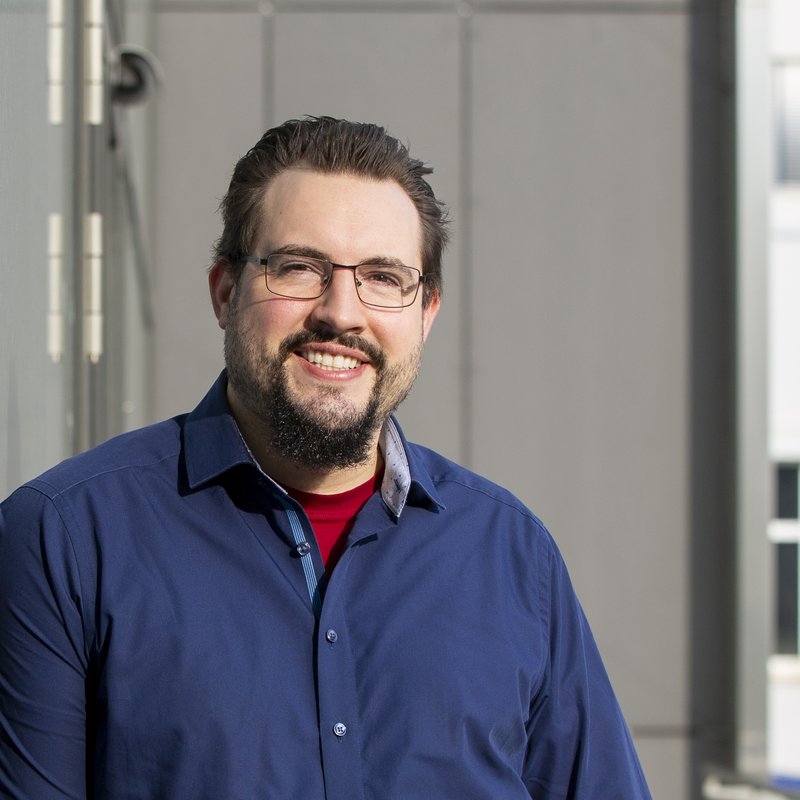
Dr. Lukas Kaupp
Research & Product Strategy
Researching context-aware fault diagnosis since 2016 – today it is fully integrated in the automated product.

Dr. Alexander Zender
Technology & Implementation
He builds the scalable system: from machine learning and system architecture, all the way to production.
AutoML subproject funded by


Current funding